Organising a Conference in Deauville: A First-Hand Experience
Organising a Large-Scale Conference: Choose Deauville, an Exceptional and Highly Accessible Venue, Contrary to Many Misconceptions
For more than a quarter of a century, infectious disease specialists have gathered annually for the “JNI” (Journées Nationales d’Infectiologie – French National Infectious Diseases Conference), a congress that also brings together colleagues from other disciplines closely involved in managing infectious risks, as well as paramedical professionals.
Although the JNI are held in a different location each year, Normandy remained the only region of France that had never hosted the event, as the convention centres in the two cities with university hospitals – Caen and Rouen – do not have sufficient capacity for a thousand or more delegates.
This situation was clearly detrimental to the region, since the event provides an opportunity to showcase local teams – which can make a significant contribution to the programme – while also enabling participants to discover a new part of the country, as relatively few French people are truly familiar with every corner of France.
Well known to Normandy’s medical teams, which regularly organise their regional conferences there, the Centre International de Deauville (CID) was the obvious solution for them. However, in order to secure the support of all the decision-makers, a number of potentially obstructive misconceptions first had to be addressed one by one before the Deauville JNI could finally become a reality – and ultimately prove a great success.
Hence this sharing of experience, without the slightest conflict of interest, other than our attachment to our region and our conviction that it deserves to become better known through many other national or European conferences, particularly in the healthcare sector.
“Deauville is all glitz and glamour, and no corporate partner will agree to support us there” — FALSE
Faced with this deeply rooted concern, which had persisted for years, the French Medical Council (Conseil de l’Ordre des Médecins) had been consulted beforehand. It concluded that there was no objection in principle, provided that the usual rules were scrupulously observed, just as they would be anywhere else – which proved easy to achieve.
Thus reassured, all potential partners – pharmaceutical and microbiological diagnostic companies, as well as healthcare service providers – attended in greater numbers than ever before in the history of the JNI, without encountering the slightest regulatory or other difficulty. On the contrary, they offered considerable praise during the post-event debriefing.
“Deauville is full of luxury hotels and offers far too little affordable accommodation for conference delegates” — FALSE
This corollary of the previous misconception proved to be untrue when put to the test, even though the JNI took place in June, an especially attractive period for tourism.
Of course, Deauville has some magnificent, internationally renowned hotels whose high-end standards (four or five stars) place them beyond the reach of professional events for healthcare workers, including for regulatory reasons. But alongside them, the range of two- and three-star hotels and residences in Deauville and the immediate surrounding area has expanded considerably. Many participants also found other solutions, much to their delight: a large, comfortable villa shared by a team, ultimately costing each individual less than a hotel; or a very comfortable bungalow at a nearby beach campsite, particularly popular with younger attendees, some of whom stayed on for a weekend “beach party” or for a triathlon taking place immediately afterwards…
“There isn’t much to do in this small town, which will put some participants off” — FALSE
With more than 2,000 participants for the first time in the history of the conference, the Deauville JNI “broke all records”, demonstrating the appeal not only of the scientific content but also of the town itself.
Deauville is obviously about much more than the cluster of luxury boutiques next to its prestigious hotels; it also offers numerous simple, nature-based activities. The town is also a gateway to a particularly beautiful region: in the heart of the Pays d’Auge, so vividly portrayed by David Hockney; with Honfleur and its legendary old harbour a little further away; followed by the D‑Day landing beaches and their powerful historical legacy; Rouen, a city that is itself a museum; and the breathtaking Mont-Saint-Michel, spectacular in every season…
“Deauville is difficult to get to” — FALSE
In highly centralised France, where not only residents of the Paris region but also people from many other parts of the country often have to travel via Paris to get from one place to another, Deauville is actually quite easy to reach. It has a direct rail connection from Paris Saint-Lazare, unbeatable in terms of carbon footprint, with the possibility of arranging special trains that could even be chartered by a sponsor.
Once there, most participants can do everything on foot – including, of course, strolling along Deauville’s famous boardwalk, which notably provides access to the CID.
“The CID is great for the American Film Festival, but not for a scientific conference” — FALSE
Like so many other conferences, particularly medical ones, the JNI combine plenary sessions – sometimes with a single session for all participants – with other periods during which seven sessions run concurrently in order to meet everyone’s necessarily different priorities for updating their knowledge.
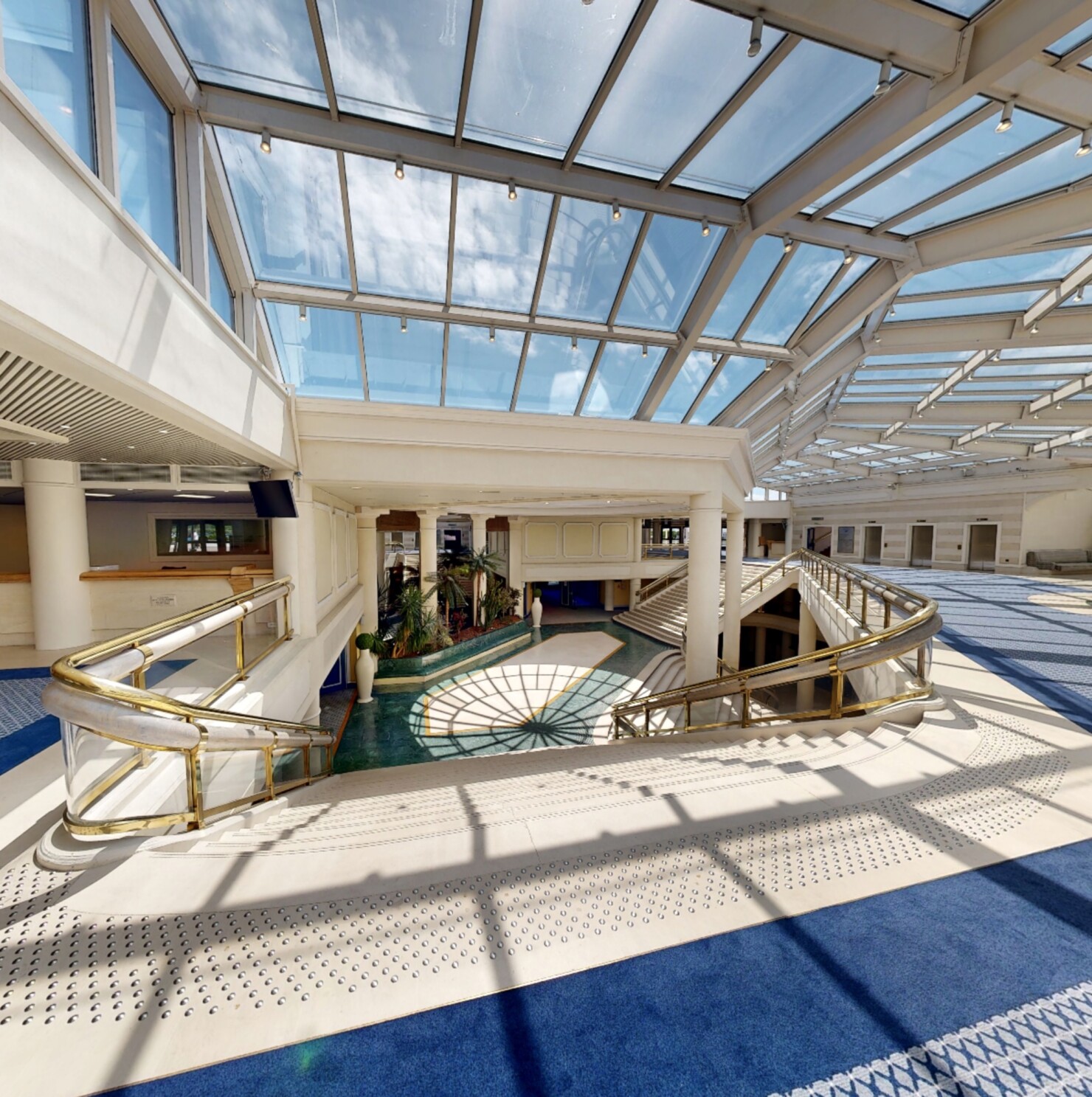
Compared with many other regional convention centres, the CID offers exemplary functionality for this purpose. Alongside the main auditorium, home to the film festival and perfectly suited to general assemblies, the CID makes it possible to create modular spaces of all sizes. The JNI did not even use half of the available space, despite providing extensive areas for poster presentations, exhibition stands, catering and networking…
“A conference in Deauville costs a fortune” — FALSE
The CID is certainly not the least expensive regional convention centre, but in our experience, when taking into account Deauville’s strong appeal to both delegates and sponsors, together with the willingness of the centre’s management – fully aware that it was in everyone’s interest to find common ground and make the event happen – the overall result proved highly satisfactory compared with many other cities.
As for the “gala evening”, a highlight of the JNI social programme and paid for entirely by each participant, it was held at a very reasonable cost in a seaside villa not far from the CID, with excellent catering and a polo demonstration right outside on the beach. The entire experience left particularly memorable impressions precisely because it was unique in the history of the conference.
Of course, depending on your needs and your audience, other towns and cities in Normandy offer excellent opportunities for gatherings of varying sizes. But above all, do not overlook Deauville when considering your options, particularly for a major conference.
Prof. François CARON
Infectious Disease Specialist at Rouen University Hospital and the University of Rouen
Chairman of the Regional Organising Committee for the Deauville JNI