Deauville to Host the World Congress on Particle Therapy: Hadron Therapy
Interview with Professor Jean-Louis Habrand (Emeritus Professor of Radiation Oncology, University of Caen Normandy, Honorary Head of Department, François Baclesse Cancer Center)
Each year, the international medical and scientific community dedicated to radiotherapy with “heavy” particles (the “hadrons,” from the Greek hadros: heavy, strong) holds its congress under the auspices of the PTCOG, a medical society that brings together researchers, physicians, physicists, and industry stakeholders involved in developing this innovative cancer therapy.
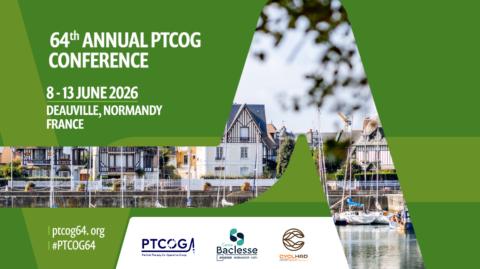
For its 2026 international edition, this major scientific event will take place at the Deauville International Center (CID), in Normandy. On this occasion, we met with Prof. Habrand, President of the Local Organizing Committee*, who has unveiled for us the scientific, technological, and logistical challenges of this exceptional congress.
Why particle radiotherapy?
Founded in 1985 in Boston (United States), the Particle Therapy Co-Operative Group (PTCOG) has become the main international scientific community entirely dedicated to heavy-particle radiotherapy: protons and heavier ions (carbon, helium, etc.).
Ballistically superior to conventional photon radiotherapy (using X‑rays), this approach makes it possible to deliver high energy radiation beams with very high precision within the “target” (i.e. the tumor), while drastically limiting irradiation of the surrounding healthy tissues and therefore limiting its further toxicity. While major advances in conventional “photon” radiotherapy now allow it to achieve such objectives for routinely treated tumors (of breast, prostate…), proton therapy tends to supplant it in the most complex situations (eye tumors, pediatric tumors, and more generally tumors in contact with highly “radiosensitive” organs such as the optic pathways, spinal cord, etc.). There are currently more than one hundred such centers worldwide, including three in France: one of them, the CYCLHAD center, has been operational in Caen since 2018, as part of a collaboration with the François Baclesse Comprehensive Cancer Center. As for heavier ions, they offer an additional and exceptional feature: increased “effectiveness” on tumor biological tissues, which makes them attractive for the most “radioresistant” primaries (sarcomas, recurrent tumors in previously irradiated areas, and more generally large tumors that cannot be surgically removed). However, because of their cost and the complexity of implementation within giant accelerators (synchrotron-type), this technology is currently available in only about fifteen centers worldwide (most of them in Japan, a few in Europe, and for the time being none in the United States… nor in France!).
Why Normandy?
The primary goal of this meeting in Deauville will be educational, with the first two days of teaching sessions open to all professionals involved in oncology. For the first time, dedicated parallel sessions are planned for paramedic staff. The scientific part will follow over the next three days, focusing on recent therapeutic advances through large clinical trials conducted worldwide, as well as more selective “pilot” studies that, for example, combine hadron therapy with other treatments such as chemotherapy, biologically “targeted” agents, or immunotherapy. New or underexplored clinical indications may also emerge from this congress. “For my part, I will be watching very closely,” Prof. Habrand tells us, “the highly promising work on carbon ions by our Japanese colleagues in a terrifying condition, pancreatic cancer…” Parallel sessions in radiobiology and medical physics will also feature prominently, of note the expertise of French teams is widely recognized, as evidenced by the involvement of a prestigious keynote speaker and Nobel laureate in Physics, Prof. Alain Aspect.
Finally, as the “icing on the cake”—and a key reason why our regional community was chosen to organize this year’s event—the last day of the congress will be devoted to the visit of a highly innovative (cyclotron‑type) accelerator nearing completion, the “C400”. Numerous scientific teams working on the GANIL campus in Caen have contributed to its development, together with the industrial group “Normandy‑Hadrontherapy.” Able to deliver high‑energy protons and heavy ions in an exceptionally compact format (due to its superconducting design), such a facility could in the future be hospital-based. Another anticipated advantage of this device is its ability to reach unusually high dose rates (potentially exceeding one hundred Gray per second!), whose incredible sparing effects on an increasing number of healthy organs exposed to radiations have been experimentally reported; this form of radiotherapy already has a name: “FLASH” irradiation. That day will of course include a visit to the Caen site (CYCLHAD Center). Commissioning for research and treatment is not expected for another two years.
Why Deauville?
While the scientific and medical agenda will bear the mark of the groups from Caen and from their national and international counterparts, logistics will rely entirely on Deauville’s exceptional hosting capacity. In view of 1,500 to 1,800 delegates, Deauville offers a hotel infrastructure that is almost unique in the region and perfectly suited to a large‑scale international event (to mention a few, G20 and the annual American Film Festival). The INDEAUVILLE department of the City Hall is also fully committed and provides supports to the highly qualified CID staff, who is in charge of managing customized “spaces”, such as the emblematic d’ORNANO Grand Auditorium (which accomodates around 1,500 attendees) not to mention smaller ones, along with numerous “parallel” meeting rooms, as required by PTCOG this year. We should also mention the vast exhibition hall, which will host industrial exhibitors. Finally, this event will be an opportunity to share with the world our love of horses during the networking event at the Clairefontaine racecourse, and our fondness for neatly aligned beach umbrellas… whose image will adorn the “congress bags”!
With this congress, we hope that Normandy will reinforce even further its image of a land of welcome for a peaceful World and for science.
*Composed of representatives from the François Baclesse and CYCLHAD centers, the University, and Caen‑la‑Mer. Action coordinated by the event group “KENES”